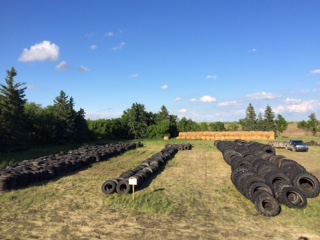
FYI – A portion of the Strasbourg Grid will be closed Monday
Two miles west of Highway 6, the road will be closed for a culvert installation. It should re-open Monday evening.
Did you know the Trans Canada Trail runs through our Municipality?
Today Trans Canada Trail announced our new connection statistics via a national news release which celebrates 80 percent connection, viewable by clicking on the following link: https://www.youtube.com/watch?v=24EDQi-xkoE Please enjoy the video which features people from across Canada who volunteer on the Trail, including Saskatchewan.
The Trail across Canada is now at 80% connected, and here in Saskatchewan we are proud to boast that we are at 71%! This is a huge jump from our 34% at the same time last year. Congratulations to all of you on a job well done—100% is just around the corner!
Facts about the Trail
To date, just over 18,000 kilometres of the Trail are operational which is 80 percent of the proposed route. Four out of five Canadians live within 30 minutes of the Trail.
Explore the Trail: Use our interactive map to highlight specific activities or points of interest, mark points or sections of the Trail you have visited and upload your own photos and stories. You’ll also find printable maps and downloadable GPS coordinates for all operational trail sections.
You can download a map for a specific Trail section, or maps for an entire province or territory.
Guidebooks and maps: Trans Canada Trail has seven official Trans Canada Trail guidebooks: Nova Scotia, P.E.I., New Brunswick, Quebec, Manitoba, British Columbia and the Northwest Territories. We also offer three stand-alone maps, particularly helpful for planning longer trips on the Trail in Atlantic Canada, Quebec and Ontario.
For more information, contact us, visit our online boutique, or get in touch with your local bookseller or travel supply store.
Visit the websites of our provincial and territorial partners. They offer a wealth of information about the Trail in every province and territory.
The Trans Canada Trail is a community-based project. Trail sections are owned, operated and maintained by local organizations, provincial authorities, national agencies and municipalities across Canada. The Trans Canada Trail does not own or operate any trail.
The Trans Canada Trail is represented by provincial and territorial organizations that are responsible for championing the cause of the Trail in their region. These provincial and territorial partners together with local trail-building organizations are an integral part of the Trans Canada Trail and are the “driving force” behind its development..
The Trans Canada Trail is truly a gift from Canadians to Canadians, and the Trail has the support of Canadians from all regions and walks of life. The Trail is also supported by corporations, foundations and all levels of government. Over the years, the Government of Canada has provided more than $35 million in funding to the Trail, including $15 million from the Department of Canadian Heritage for Trail construction, and $10 million from Parks Canada in October 2010.
The Government of Canada is also currently matching 50 cents of every dollar donated to the TCT in support of completing the Trail and connecting Canadians coast to coast to coast by the 150th anniversary of Confederation in 2017.
Donate now and help us connect the Trail in time for Canada’s 150th birthday!
The Rural Municipality of Cupar #218 has set the Annual Oil Recycling Day for August 14, 2015 from 7:00 a.m. – 4:30 p.m. at the RM Shop in Markinch. GFL Environmental will be there to collect used oil and filters. If someone is unable to attend that day – please let me know and GFL may be able to come back on another day.
For more info on used oil recycling – visit http://usedoilrecyclingsk.com/
One year agoSeeding was wrapping up. The majority of crops were behind their normal stages of development for that time of year. Heavy rain was received in many areas. |
||||||||||||||||||||||||
|
||||||||||||||||||||||||
|
||||||||||||||||||||||||
Topsoil moisture conditions remain dry despite the recent rain. Provincially, topsoil moisture conditions on cropland are rated two as per cent surplus, 46 per cent adequate, 38 per cent short and 14 per cent very short. Hay land and pasture topsoil moisture is rated as one per cent surplus, 33 per cent adequate, 42 per cent short and 24 per cent very short. Much of the hay is in poor condition and there are concerns about feed shortages.
Crop development is delayed in many areas due to cool and dry weather. Early seeded crops in drier areas are beginning to bolt and/or flower but remain short and thin. Sixty-nine per cent of fall cereals, 58 per cent of spring cereals, 51 per cent of oilseeds and 57 per cent of pulse crops are at their normal stages of development for this time of year.
Farmers are busy controlling pests, hauling grain and beginning to cut hay.
EC SK Crop Development – June 22 |
|||
% Ahead |
% Normal |
% Behind |
|
Fall Cereals |
6.7 |
77.3 |
16.0 |
Spring Cereals |
4.4 |
58.5 |
37.1 |
Oilseeds |
3.3 |
46.4 |
50.3 |
Pulse Crops |
1.7 |
64.5 |
33.8 |
The region received varying amounts of rain this past week, ranging from trace amounts to 50 mm (Saltcoats), which has helped replenish soil moisture in many areas. However, more rain will be needed soon to help crops, hay and pasture develop. The Bradwell area leads the region in accumulated precipitation (115 mm) received since April 1.
The recent rain helped slow down soil moisture deterioration. Topsoil moisture conditions on cropland are rated as four per cent surplus, 59 per cent adequate, 30 per cent short and seven per cent very short. Hay land and pasture topsoil moisture is rated as one per cent surplus, 47 per cent adequate, 43 per cent short and nine per cent very short.
Reports indicate that crops are progressing well, with the exception of canola in some areas where germination was spotty. Forty per cent of seeded acres, 52 per cent of forages and 53 per cent of pasture acres are reported as being under moisture stress. The majority of crop damage this week was caused by lack of moisture, flea beetles and hail. Producers are busy controlling pests, hauling grain and getting haying equipment ready.
As ironic as it may seem – we are talking about flooding and drought in the same year.
Dry conditions are becoming a major concern for a number of producers across Saskatchewan. SCIC’s business risk management programs can provide support for farmers and ranchers who have challenges as a result of dry conditions.
The Crop Insurance Program offers producers flexibility to contend with changing conditions as the growing season progresses. There are a number of options and choices producers can make about how they manage their coverage and compensation:
Producers concerned about the impact of the dry conditions on their crop should contact their local Crop Insurance office to review the options available for claims, compensation and the requirements for the options they choose.
The AgriStability Program is also available to offer assistance:
The Ministry of Agriculture continues to monitor the ongoing situation and are exploring potential solutions, including:
We would like to remind producers to explore the existing programs and potential options available to them.
Contacts:
Ag Knowledge Centre 1-866-457-2377
Crop Insurance 1-888-935-0000
AgriStability 1-866-270-8450
Sincerely,
Shawn Jaques
President and CEO
Saskatchewan Crop Insurance Corporation
One year agoProducers had 95 per cent of the crop in the ground. Cool weather and heavy rain delayed crop development in much of the province. |
||||||||||||||||||||||||
|
||||||||||||||||||||||||
|
||||||||||||||||||||||||
Much of the province received scattered rainfall that helped replenish topsoil moisture conditions in some regions. However, significant rain is needed soon in many areas to help crops, hay and pasture develop.
Topsoil moisture conditions continue to deteriorate despite the recent rain. Provincially, topsoil moisture conditions on cropland are rated as three per cent surplus, 45 per cent adequate, 35 per cent short and 17 per cent very short. Hay land and pasture topsoil moisture is rated as one per cent surplus, 33 per cent adequate, 42 per cent short and 24 per cent very short. Much of the hay is in poor condition and concerns about feed shortages continue. The Ministry of Agriculture has a Forage, Feed and Custom Service listing for producers to advertise and source feed products: http://www.agriculture.gov.sk.ca/FeedForageListing#bmk
Crop development is delayed in some areas, mainly due to cool and dry weather. Fifty-one per cent of fall cereals, 60 per cent of spring cereals, 53 per cent of oilseeds and 56 per cent of pulse crops are at their normal developmental stages for this time of year. The majority of crops are in fair to good condition. Crop damage was mainly caused by lack of moisture, hail and insects such as grasshoppers and flea beetles.
Farmers are busy controlling pests and hauling grain.
SK (provincial) Crop Conditions – June 15, 2015 |
|||||||
Winter wheat |
Fall rye |
Spring wheat |
Durum |
Oat |
Barley |
Canaryseed |
|
% excellent |
4 |
3 |
6 |
2 |
8 |
6 |
2 |
% good |
36 |
19 |
51 |
39 |
63 |
53 |
41 |
% fair |
51 |
14 |
33 |
47 |
23 |
34 |
34 |
% poor |
6 |
17 |
9 |
9 |
5 |
6 |
15 |
% very poor |
3 |
47 |
1 |
3 |
1 |
1 |
8 |
Flax |
Canola |
Mustard |
Soybean |
Pea |
Lentil |
Chickpea |
|
% excellent |
3 |
3 |
1 |
8 |
4 |
3 |
0 |
% good |
48 |
44 |
32 |
61 |
49 |
44 |
55 |
% fair |
42 |
36 |
45 |
29 |
36 |
39 |
44 |
% poor |
6 |
13 |
19 |
2 |
9 |
11 |
1 |
% very poor |
1 |
4 |
3 |
0 |
2 |
3 |
0 |
East-Central Saskatchewan (Crop District 5 – Melville, Yorkton, Cupar, Kamsack, Foam Lake, Preeceville and Kelvington areas; Crop District 6A – Lumsden, Craik, Watrous and Clavet areas)
EC SK Crop Development – June 15 |
|||
% Ahead |
% Normal |
% Behind |
|
Fall Cereals |
11 |
74 |
15 |
Spring Cereals |
5 |
67 |
28 |
Oilseeds |
2 |
56 |
42 |
Pulse Crops |
4 |
71 |
25 |
Varying amounts of rain fell in the region helping to replenish dry soil conditions in many areas. However, more rain will be needed soon to help crops, hay and pasture develop. The Rose Valley area received 63 mm of rain, bringing the total received since April 1 to 112 mm. There are several reports of hail, strong winds and light frost damaging crops.
The recent rain slightly improved cropland topsoil moisture conditions in some areas, although hay land and pasture topsoil moisture conditions are deteriorating. Topsoil moisture conditions on cropland are rated as five per cent surplus, 55 per cent adequate, 35 per cent short and five per cent very short. Hay land and pasture topsoil moisture is rated as one per cent surplus, 43 per cent adequate, 47 per cent short and nine per cent very short.
Emerged crops are slow to develop and much of the re-seeded canola crops remain small. There are also varying stages of crop in many fields, making pesticide application timing difficult. Seventy-four per cent fall cereals, 67 per cent of spring cereals, 56 per cent of oilseeds and 71 per cent of pulse crops are at their normal developmental stages for this time of year. Most crops in the region are in fair to good condition, although rain and warm weather is needed. The majority of crop damage was caused by lack of moisture, flea beetles, hail and frost. Producers are spraying weeds as weather and crop development allows.
Farmers are busy controlling pests and hauling grain.
First home game so we can anticipate two things – office dress codes are not in effect (just wear green) and it will rain. The past three years have had some wicked storms on the last day of Farm Progress, which was also the first game of the season. So bring your green helmet to prevent hail damage, your green slicker to keep you dry, your green bunnyhug to keep you warm and cheer hard!
The RM of Cupar has donated annually $200 to the Agriculture in the Classroom program: http://www.aitc.sk.ca/
https://www.youtube.com/watch?v=mbsiTdii2ko&feature=em-upload_owner
Beetle collection days are scheduled for Thursday July 2/2015 and Friday July 3/2015 at the Besant Campground, 25 km west of Moose Jaw on # 1 Highway.
Anyone is welcome to attend and collect Leafy Spurge Beetles as bio-controls for larger patches of leafy spurge in their areas.
If you cannot attend the collection days, but want beetles, there is a second option of hiring the two young men who will be travelling with me. They will collect beetles for anyone willing to pay them, for their efforts, on a contract basis at a cost of $ 50.00 per lot of 2500 – 3000 beetles. This collection takes place on very hot days 26 degrees plus and takes them about 1 hour to collect 1 lot of 3000 beetles.
My program does not have a budget to pay these young men, but I can pay the cost of packing and shipping the beetles to a chosen location for quick pick-up and release. Arrangement can be made for me to meet someone, if it is on my route back to Saskatoon on the evening of July 3.
Invoices will be sent out after the beetle collections are made and the beetles are shipped, or delivered.
If there is enough interest collections could be arranged for July 6 – 10/2015 at the same location. Weather permitting, of course.
Please have people contact me for additional information and booking collections.
Please pass this information on to any ratepayers or organizations in your area that may be interested in obtaining Leafy Spurge Bio-Control Beetles.
You can pass on my contact information to all interested people.